
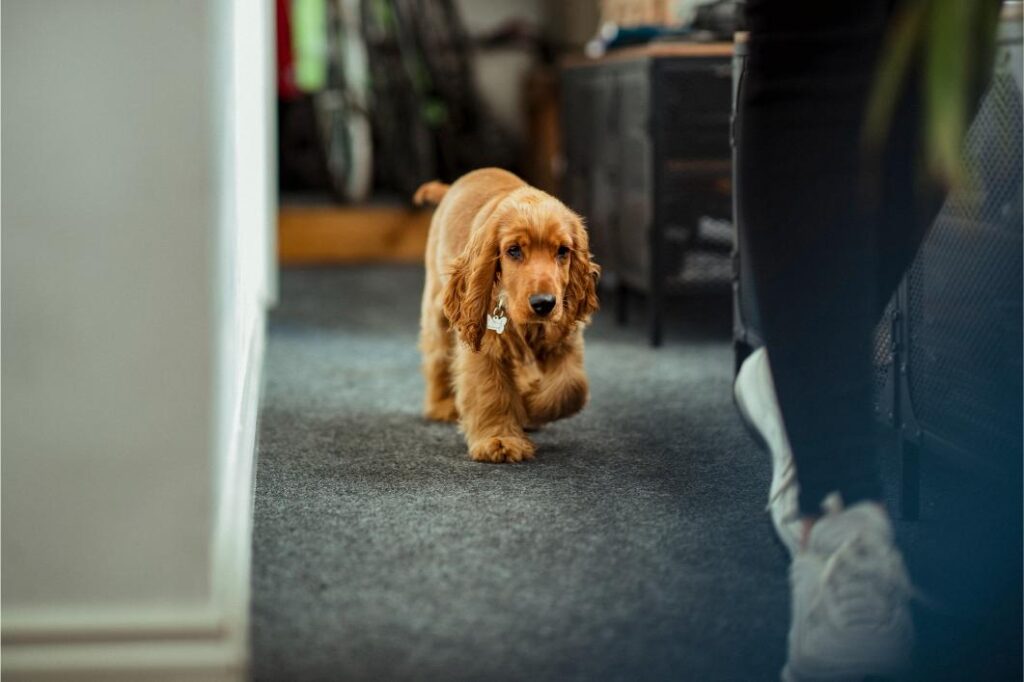
Some dogs are content to nap in the next room. Others act like tiny, tail-wagging shadows. If your dog follows you everywhere—from the couch to the kitchen to the bathroom—you may be navigating what veterinarians affectionately call Velcro dog behavior.
While it can be adorable (who doesn’t love a loyal companion?), constant clinginess sometimes signals something deeper. Understanding why a dog always follows the owner can help you best support your pooch’s emotional and physical well-being.
The Sweet Side of Shadowing
If you often wonder, “Why does my dog follow me everywhere,” we have good news. In many cases, clingy pets are just curious, opportunistic about snacks, or their favorite place to be is wherever their favorite human is.
Harmless reasons why a dog always follows the owner include:
- Pack mentality: Dogs naturally stay close to their family group.
- Positive reinforcement: Being by your side often leads to treats, playtime, or attention.
- Curiosity: Your dog wants to watch what exciting thing you’ll do next.
- Routine awareness: Dogs learn quickly that following humans typically leads to good things, so it’s become part of their daily routine.
Velcro Dog Behavior: When Attachment Gets Intense
Some breeds are particularly prone to Velcro dog behavior. These pups were often bred to work closely with humans and may naturally crave constant companionship. Still, even the most loyal lapdog should feel comfortable being alone occasionally.
Breeds known for shadowing their owners include:
- Labrador Retrievers
- Golden Retrievers
- Border Collies
- Vizslas
- German Shepherds
When ‘My Dog Follows Me Everywhere’ May Signal a Problem
Sometimes, a dog always following the owner can hint at stress or discomfort. If the behavior seems sudden or excessive, it may be worth taking a closer look.
Signs that clinginess may indicate a concern include:
- Distress when you leave the room
- Pacing, whining, or barking when separated
- Destructive behavior when left alone
- Sudden changes in behavior or attachment
- Restlessness or difficulty settling down
These behaviors may point to separation anxiety, stress, or even underlying medical issues—especially in older dogs that may stick closer to their people due to vision changes, hearing loss, or cognitive decline.
Helping Your Dog Build Healthy Independence
A little gentle training can help build confidence and encourage independence without damaging your loving bond.
Try these strategies:
- Create a cozy comfort zone with a comfy bed nearby where your pup can relax independently.
- Practice short separations and gradually increase your time apart.
- Offer engaging enrichment, such as puzzle toys and chew treats, to keep curious canines occupied.
- Praise your dog when they calmly rest on their own.
- Maintain predictable routines to help reduce anxiety and uncertainty.
When to Talk to Your Veterinarian
If Velcro dog behavior becomes intense, sudden, or stressful for your pet, contact our team at Shiloh Veterinary Hospital at (818) 614-9929. We can help rule out medical causes and recommend behavior strategies or treatments if needed.